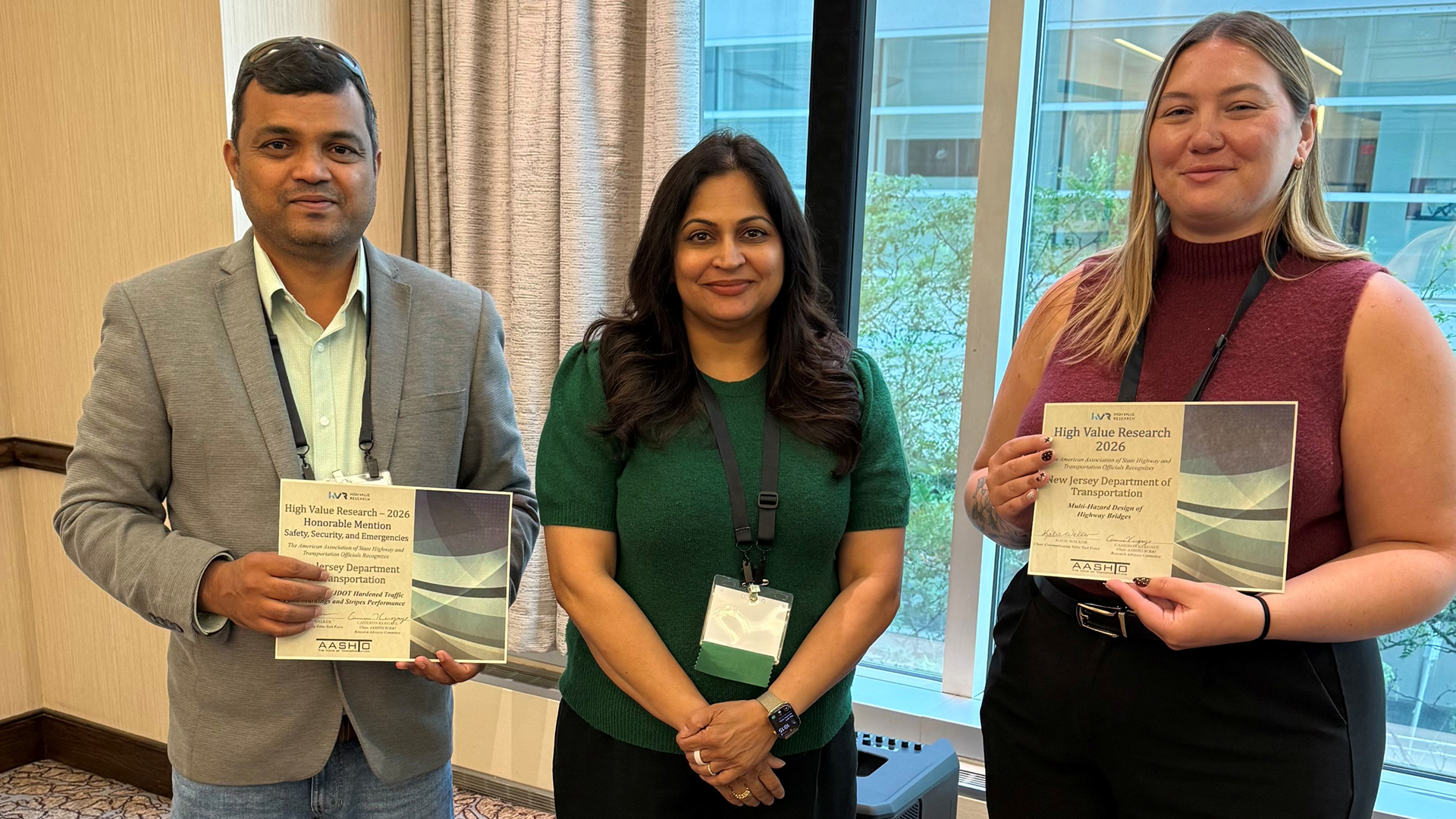
Two research projects managed through the New Jersey Department of Transportation’s Bureau of Research, Innovation, and Information Transfer (BRIIT) received 2026 High Value Research Awards from the American Association of State Highway and Transportation Officials (AASHTO) Research Advisory Committee (RAC). RAC presented the awards at its July 2026 summer meeting in Pittsburgh, Pennsylvania. The recognition highlights the contributions of BRIIT project managers Dr. Giri Venkiteela and Devyn Cordero in advancing research that improves transportation safety and infrastructure resilience in New Jersey.
Evaluation of NJDOT Hardened Traffic Paint Markings and Stripes Performance
The first project honored, Evaluation of NJDOT Hardened Traffic Paint Markings and Stripes Performance, concluded in 2025. The principal investigators were Dr. Mohammad Jalayer (Rowan University), Dr. Subasish Das (Texas State University), and Adam Pike (Texas A&M Transportation Institute). BRIIT’s Dr. Giri Venkiteela served as project manager, coordinating the work of the research team and helping ensure that the study’s findings translated into practical recommendations for NJDOT.
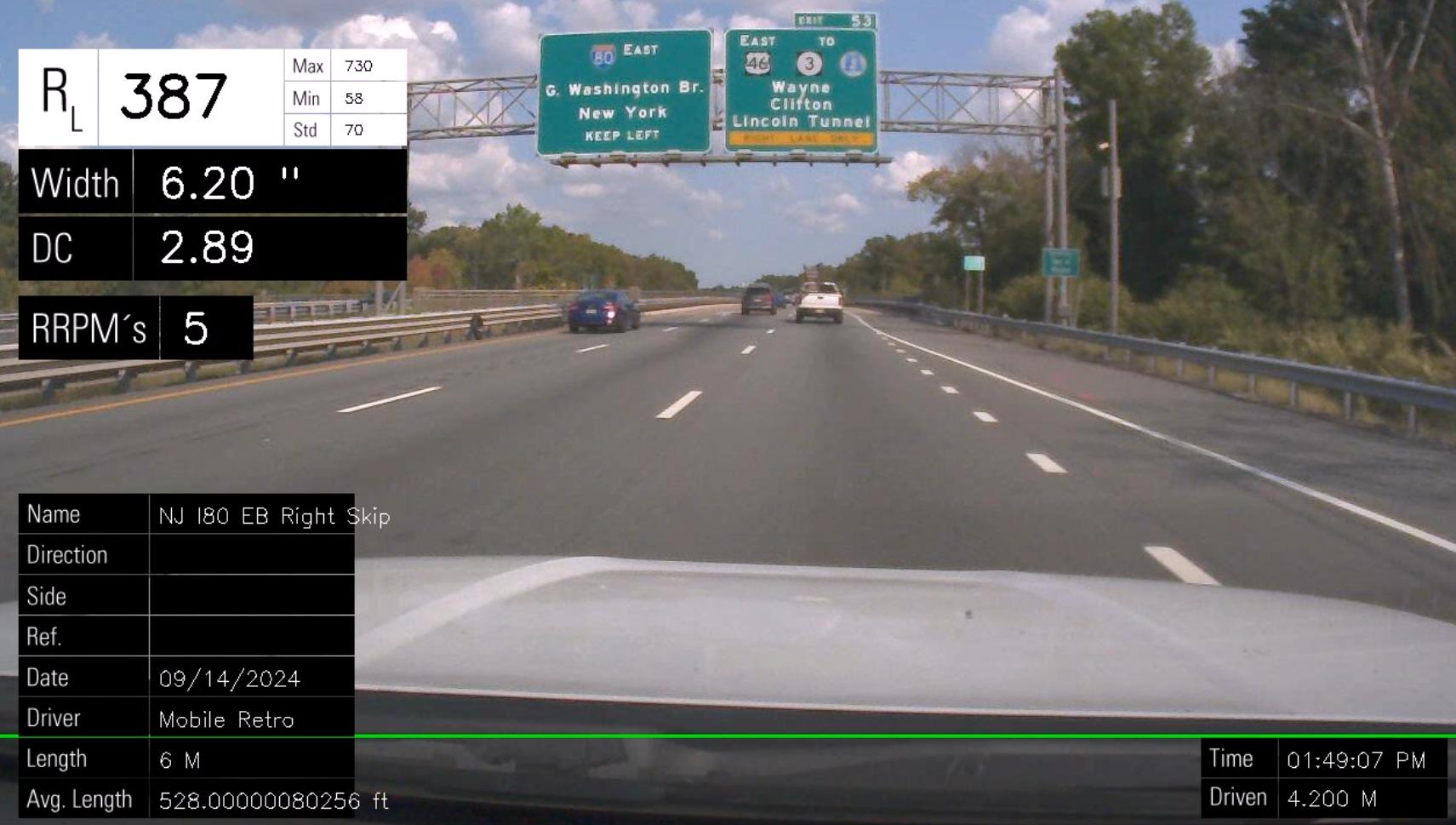
During the field tests, a forward-facing camera recorded the pavement markings while a mobile retroreflectometer collected the retroreflectivity measurements (data overlaid on left).
Pavement markings are critical to roadway safety, but several factors can affect their visibility. To be most effective, markings must be visible under a variety of traffic and weather conditions. In addition to human drivers, many autonomous vehicle (AV) systems rely on pavement markings. This research project sought to identify the best materials for New Jersey’s traffic and weather conditions. The ideal materials are both durable and cost-effective.
The research included a review of best practices, stakeholder interviews, and field testing. Engineers usually use retroreflectivity—the amount of light reflected from the markings when headlights shine on them—to assess nighttime visibility. Researchers can also assess marking quality through service life, daytime color, and drying time. Between 2023 and 2025, the research team conducted three field tests along 14 routes across New Jersey. Mobile retroreflectometers and cameras measured the presence and retroreflectivity of pavement markings. Using image processing and computer vision analysis, the team objectively classified the quality of each pavement marking.
Some recommendations to improve pavement marking maintenance and performance include:
Use context-sensitive pavement marking materials. The most visible and durable materials—thermoplastic and pre-formed tape—are also the most expensive, so limit use to high-volume or critical routes. Epoxy—the most widely used material in the state—is less durable, but more cost-effective for lower-volume routes. Waterborne paints are best suited for temporary markings in work zones. In addition to appropriate materials, measures like recessed markings in snow-prone areas and the statewide adoption of six-inch lines can further improve performance.
Streamline data collection and consistently measure performance. Several segments had missing data on pavement marking material and condition. A centralized system that consistently tracks this data will provide more accurate information on performance over time. Standardizing quality assurance procedures will improve data accuracy. Visual inspections alone are not enough, as they overestimate marking quality compared to objective retroreflectivity testing.
Adopt performance-based rather than interval-based maintenance schedules. The research team recommends a retroreflectivity threshold of 150 mcd/m2/lux for white pavement markings. Many markings in New Jersey fell below that threshold seven to eight months after installation. Performance-based restriping can quickly address lower quality markings, improving overall road safety.
The project’s selection for a High Value Research Award reflects the practical value of its findings and the successful collaboration among the research team, NJDOT stakeholders, and BRIIT project management.
NJDOT Multi-Hazard Design of Highway Bridges Recommendations
The second award-winning project, NJDOT Multi-Hazard Design of Highway Bridges Recommendations, was completed in 2026. Dr. Hani Nassif, from the Rutgers Infrastructure Monitoring and Evaluation Group, was the principal researcher. BRIIT’s Devyn Cordero served as project manager, facilitating collaboration among researchers and agency stakeholders and helping guide the project toward recommendations that address real-world infrastructure challenges.
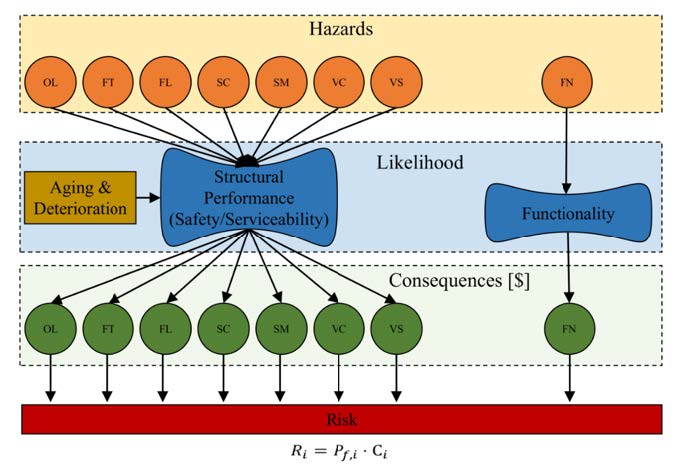
The process of assessing risk for a bridge includes evaluating the likelihood of a hazard and the consequences of bridge deterioration
Highway bridges are often exposed to hazards—both natural and human-caused—which can threaten their structural integrity. Earthquakes, flooding, storm surge, wind, fire, and vehicle or vessel collisions may impact New Jersey’s bridges. Although most bridges experience concurrent or cascading hazards, current design guidance from AASHTO, NJDOT, and NJDEP focuses on isolated hazards. A multi-hazard approach can supplement this guidance.
For each hazard, design strategies—hazard-resistant materials, redundancy, elevation, and reinforcement—can mitigate the risk of structural failure. Existing mapping tools, like FEMA flood maps and USGS seismic hazard maps, can support site-specific hazard assessments. The research team reviewed hazard response practices that other state Departments of Transportation use, looking at emergency response guidelines and checklists that facilitate emergency bridge inspection and repair. The report outlines the four phases of emergency response—preparedness, response, recovery, and post-event—with procedures to train staff, standardize protocols, streamline data collection, and effectively allocate resources.
The research team recommends that NJDOT define which hazards to consider and determine each bridge’s risk index. Because New Jersey has so many bridges, the agency must prioritize bridges for a multi-hazard approach. A structured risk-based classification system will support this prioritization. For each bridge, NJDOT will calculate a criticality factor based on its symbolic importance, economic importance, and detour impact; bridges with high criticality factors are prioritized. NJDOT would then prioritize each bridge component based on its importance to the bridge structure, the likelihood of impact from the hazard, and its vulnerability to damage.
NJDOT should undertake three strategies to successfully adopt a multi-hazard framework:
- Add multi-hazard design guidance to the NJDOT Bridge Design Manual. Guidance should include details on when the multi-hazard approach is recommended over the standard single-hazard approach.
- Coordinate with other state and federal agencies to maintain an updated database of hazard risk and relevant regulations to ensure effective design and reduce delays.
- Develop guidelines and checklists for bridge designers to follow permitting procedures. Checklists will ensure engineers address environmental and community impacts early in the design process, streamlining design while promoting consistency and transparency.
The project’s recognition by AASHTO RAC highlights the importance of its recommendations for improving bridge resilience as well as the collaborative efforts that brought the research from concept to implementation.
The recognition of these two projects highlights the important role BRIIT plays in advancing transportation research for New Jersey. Through the efforts of project managers such as Dr. Giri Venkiteela and Devyn Cordero, BRIIT helps identify research needs, coordinate partnerships among agencies and universities, and translate research findings into practical solutions. These awards recognize not only the value of the research itself, but also the project management and coordination required to bring innovative ideas from concept to implementation. Together, the projects demonstrate how BRIIT helps ensure that transportation research delivers measurable benefits for NJDOT and the traveling public.
The resources section below provides more information about each project, including links to the full reports.
Resources
Jalayer, Mohammad, Subasish Das, Adam Pike, and Yusuf Mehta. (2025). Evaluation of NJDOT Hardened Traffic Paint Markings and Stripes Performance. FHWA-NJ-2025-002. New Jersey Department of Transportation, Bureau of Research, Innovation & Information Transfer. Final Report. https://njdottechtransfer.net/wp-content/uploads/2026/03/FHWA-NJ-2025-002.pdf
Jalayer, Mohammad, Subasish Das, Adam Pike, and Yusuf Mehta. (2025). Evaluation of NJDOT Hardened Traffic Paint Markings and Stripes Performance. FHWA-NJ-2025-002. New Jersey Department of Transportation, Bureau of Research, Innovation & Information Transfer. Technical Brief. https://njdottechtransfer.net/wp-content/uploads/2026/03/FHWA-NJ-2025-002-TB.pdf
Nassif, Hani, Patrick Lou, Harry A. Capers, Jr., and Chaekuk Na. (2026). NJDOT Multi-Hazard Design of Highway Bridges Recommendations. FHWA-NJ-2026-001. New Jersey Department of Transportation, Bureau of Research, Innovation & Information Transfer. Final Report. https://njdottechtransfer.net/wp-content/uploads/2026/02/FHWA-NJ-2026-001.pdf
Nassif, Hani, Patrick Lou, Harry A. Capers, Jr., and Chaekuk Na. (2026). NJDOT Multi-Hazard Design of Highway Bridges Recommendations. FHWA-NJ-2026-001. New Jersey Department of Transportation, Bureau of Research, Innovation & Information Transfer. Technical Brief. https://njdottechtransfer.net/wp-content/uploads/2026/02/FHWA-NJ-2026-001-TB.pdf