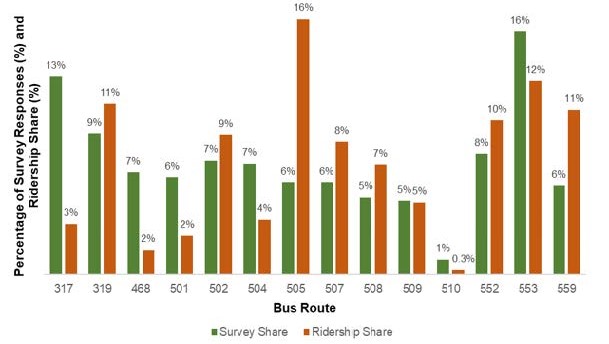
Bus ridership has declined over the past decade both nationally and within New Jersey, with a more pronounced reduction during the COVID-19 pandemic due to changes in travel behavior and commuting patterns. Although ridership has gradually recovered in recent years, levels in many regions, including New Jersey, remain below pre-pandemic conditions. NJ TRANSIT operates an extensive bus network that supports mobility, accessibility, and regional connectivity, particularly in South Jersey and the Shore region; however, recent post-COVID travel patterns, seasonal variations in demand, and workforce-related travel needs are not fully understood, limiting the ability to design targeted service improvements. This study evaluates travel behavior and transit needs across fourteen NJ TRANSIT bus routes using onboard rider surveys and field-based employee and employer surveys. The analysis identifies travel patterns, service gaps, and unmet mobility needs across weekday, weekend, and seasonal conditions, including origin–destination patterns, rider characteristics, and factors influencing transit use and non-use. The findings highlight key service challenges, including reliability, frequency, accessibility, and competition with private vehicles, as well as workforce-related commuting needs. These data-driven insights support the development of targeted strategies to improve transit performance and enhance bus services in South Jersey and the Shore region.
Identifying Travel Needs for South Jersey and Shore Customer Survey
Status: Completed
Report Number: FHWA-NJ-2026-002
Performing Organization: Rowan University
Principal Investigator(s): Jalayer, Mohammad
Project Manager(s): Ukpah, Priscilla
Start Date: April 14, 2024
Completion Date: April 14, 2026