The NJ State Transportation Innovation Council (NJ STIC) convened for its first Triannual Meeting of 2026 on April 28. The central discussion focused on the release of Round 8 of the Every Day Counts (EDC-8) program innovations. NJ STIC members discussed which innovations New Jersey should prioritize and shared examples of ongoing initiatives supporting these innovations. Following the discussion, the NJDOT Bureau of Research, Innovation, and Information Transfer (BRIIT) led a Mentimeter engagement activity to gather additional input from NJ STIC members.
Welcoming Remarks and FHWA Updates
Eric Powers, Assistant Commissioner at NJDOT, delivered the welcoming remarks. He highlighted the relevance of many of the EDC-8 innovations to transportation improvements in New Jersey and expressed interest in hearing what members’ perspectives. Mr. Powers also introduced Michael Manzella, the new NJDOT Director of Statewide Planning. Mr. Manzella shared his appreciation for joining the team and for the participation of NJ STIC members.
Christopher Paige, Innovation Coordinator and Community Planner at the FHWA NJ Division Office, noted that a progress report is due by May 15 for the $97,147 STIC Incentive Grant awarded to the New Jersey Sports and Exposition Authority (NJSEA). The grant supports efforts to optimize adaptive system performance and improve travel time using the Automated Traffic Signal Performance Measures (ATSPM) Module.
Every Day Counts Round 8
Giri Venkiteela, Innovation Officer for the NJDOT BRIIT, presented the six new EDC-8 innovations. After each overview, NJ STIC members discussed the importance of the topic, its relevance to New Jersey, and any related ongoing initiatives. Additional information on the EDC-8 Innovations is available on the FHWA website.
A summary of each innovation follows:
Advancing Nighttime Work Zone Safety
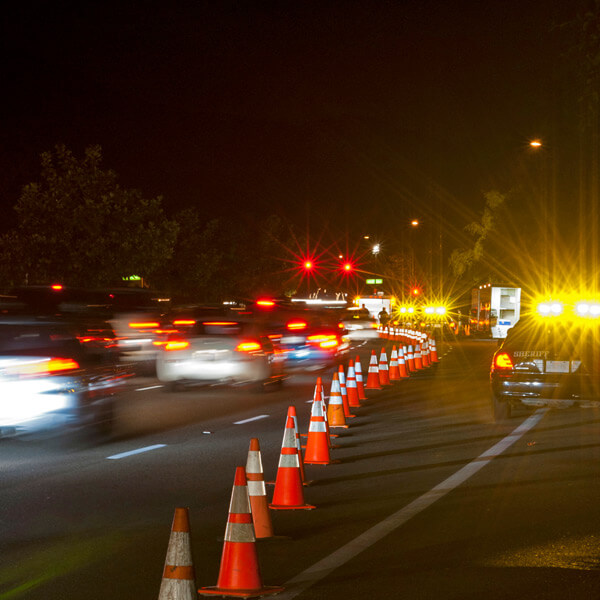
Lighting for work zone safety
Nightime roadwork can present significant risks, and this effort focuses on safer conditions through standardized lighting, protective devices, traffic control strategies, and technologies such as automated intrusion alarms. By improving visibility, reducing speeds, and strengthening coordination, these approaches aim to lower fatal crashes and protect workers. NJ STIC members emphasized its relevance, noting that safety remains a major area of interest for NJDOT.
Beyond Bid-Build: Innovative Project Delivery Methods
Alternative contracting approaches—such as Design-Build, CM/GC, and Progressive Design-Build—offer agencies more flexibility to manage risk and deliver complex infrastructure projects efficiently. The discussion raised questions about whether the focus extends beyond contracting methods; Mr. Paige indicated he would follow up.
Connected Corridors
Transportation systems rely on accurate, real-time information, yet agencies continue to face challenges with inconsistent data standards, incompatible tools, and fragmented communication across agencies. The effort encourages more consistent, real-time data sharing across agencies through common standards. Vandana Mathur, Supervisor of Transportation Mobility & Research at NJDOT, noted that the Mobility and Operations team is already advancing several data-sharing initiatives and is working with GFT Technologies to improve tools and techniques.
Integrated Digital Project Delivery
Many transportation projects still face delays and data gaps throughout the planning, development, and maintenance process.
This initiative aims to connect data, tools, and teams across all project phases by replacing paper-based workflows with shared digital models and open data standards. Ms. Mathur highlighted ongoing efforts of the Mobility and Operations team, including the use of Drivewyze to provide real-time alerts for lane closures, traffic, and emergency information to commercial vehicle drivers. NJDOT’s Capital Program Management group is also advancing digital project delivery for designs through existing software.
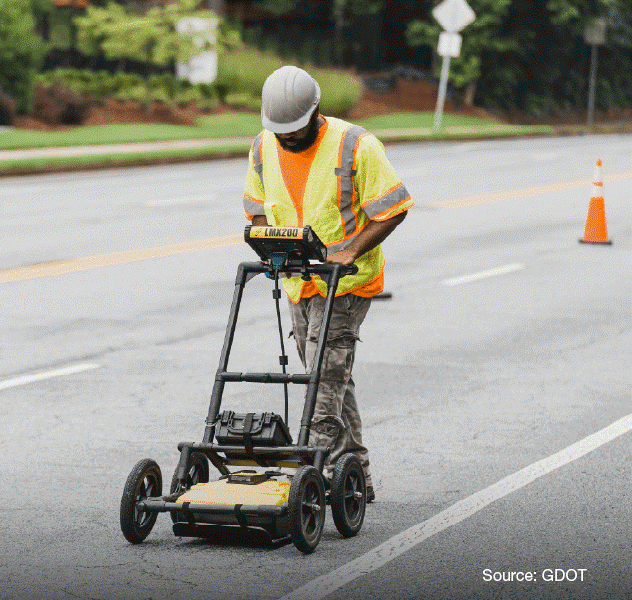
Device for detecting subsurface utilities
Subsurface Utility Engineering (SUE)
Uncertainty about underground utilities continues to create delays and cost overruns during project development. Improved engineering, surveying, and geophysical methods can help accurately locate and map these utilities before construction begins. NJ STIC members from the NJDOT Division of Environmental Resources expressed interest, particularly given the presence of stormwater infrastructure.
UAS 2.0: Innovative Infrastructure Management
Building on the success of the EDC-5 UAS effort, advances in unmanned aerial systems (UAS) technology are expanding how agencies approach infrastructure inspection, maintenance, and emergency response. New capabilities—such as remote docking, onboard lighting, and targeted spraying—can improve efficiency and support more continuous operations in the field.
NJDOT established its UAS program in 2016 and plans to incorporate these capabilities as part of EDC-8. Kimbrali Davis, Manager of the NJDOT Bureau of Aeronautics, highlighted ongoing work to strengthen UAS data capture, maintenance, and long-term centralized data warehousing. The team is developing a dashboard that will provide access to images and data from previous NJDOT UAS missions, along with a form-based tool to request future deployments when data are not already available.
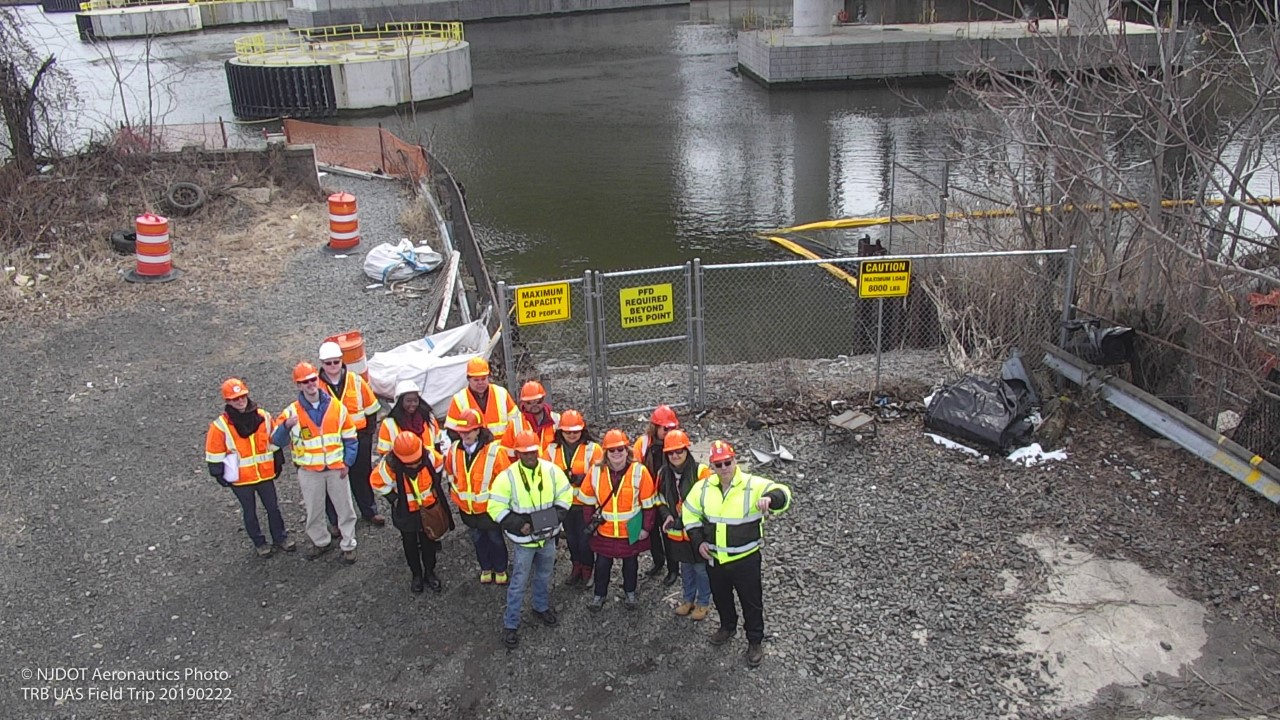
Drone photo taken by NJDOT Bureau of Aeronautics team
Jeevanjot Singh, Section Chief for Safety Programs Management within the Bureau of Safety Improvement Programs (BSIP), suggested connecting UAS and Subsurface Utility Engineering (SUE) efforts by using LiDAR-equipped drones to evaluate subsurface conditions not visible to the naked eye. Ms. Davis noted that the NJDOT UAS team is exploring the purchase a drone with LiDAR capabilities and suggested that Ms. Singh could help advance that effort.
Members also highlighted ongoing procurement challenges tied to federal regulations that limit available drone suppliers, with Skydio currently serving as the primary option. This constraint has created a bottleneck for new purchases.
Mentimeter Activity
NJDOT BRIIT used Mentimeter to gather feedback on the EDC-8 innovations and NJ STIC priorities. Questions familiarity with the Every Day Counts program, knowledge of the six innovations, implementation barriers, and topics of interest for future meetings.
Key takeaways include: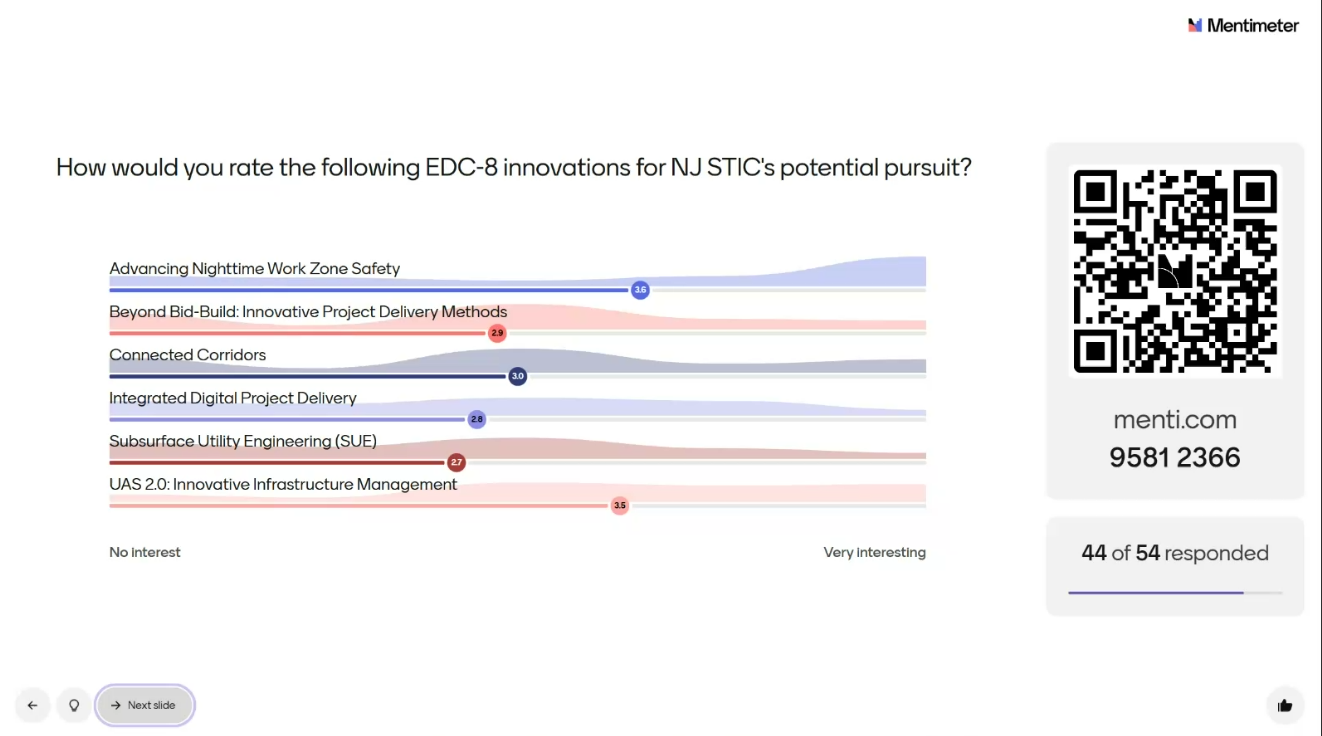
- Most attendees represented NJDOT, with Planning & Environment and Safety professionals comprising the largest groups. Staff from Mobility & Operations, Organizational Support, and Infrastructure Preservation also took part.
- Most attendees were familiar with the Every Day Counts program and had some prior knowledge of EDC-8 innovations.
- Attendees reported the highest familiarity with Advancing Nighttime Work Zone Safety and Connected Corridors
- Attendees rated Advancing Nighttime Work Zone Safety and UAS 2.0 as top priorities for NJ STIC.
- Funding and organizational silos emerged as the primary barriers to implementation.
- Artificial intelligence (AI) was identified as the top topic of interest for a future NJ STIC meeting.
Announcements and Reminders
NJSEA STIC Incentive Project
NJSEA is partnering with NJDOT and Atkins Realis to advance the STIC Incentive project. Current efforts include equipment procurement, site preparation, and development of system for targeted intersections.
Build a Better Mousetrap
Submissions for the national Build a Better Mousetrap competition are due May 1. Submissions for the NJDOT Research Showcase are due by August 1. For more information, click here.
Next Meeting
The NJ STIC 2nd Triannual Meeting of 2026 will take place on Wednesday, August 12, at 10:00 AM.
A recording of the NJ STIC 2026 1st Triannual Meeting is available here, along with the day’s presentations below.
Click for Slides